English
 français
 Deutsch
 русский
 italiano
 español
 português
 العربية
 日本語
日本語 Polski
 中文
中文
Como podemos ajuda-lo
Você pode nos contatar da maneira que for conveniente para você. Nós estão disponíveis 24 horas / 7 dias via e-mail ou telefone.
Contate-Nos
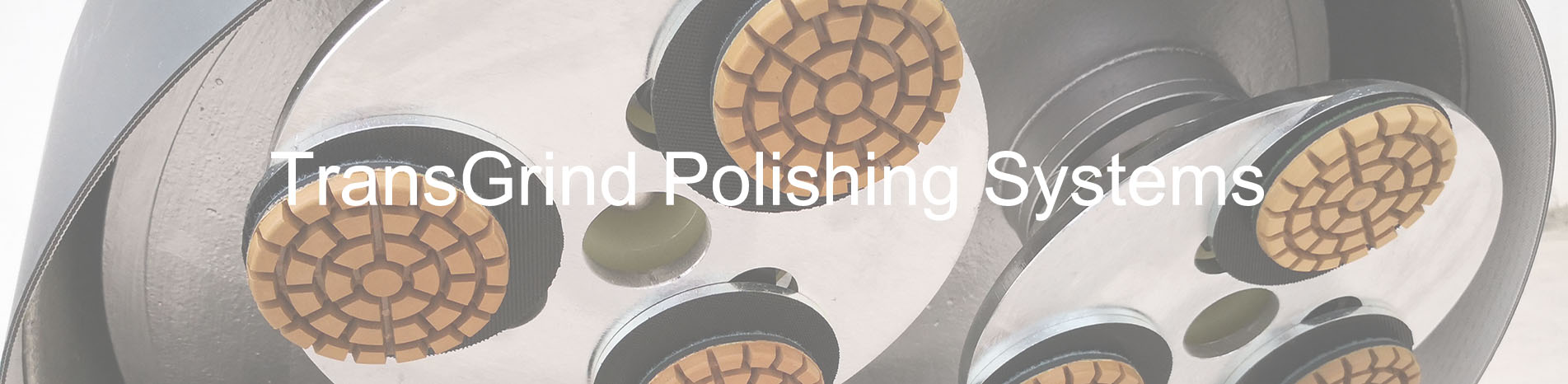
Não existe uma única velocidade de lixamento que funcione para todos os pisos de concreto. A velocidade correta depende da lixadeira, da ferramenta diamantada, da condição do concreto e da etapa de lixamento. Em geral, a máquina deve operar a uma velocidade que permita que os diamantes mantenham um contato eficaz com o concreto e removam o material de forma consistente, sem gerar calor excessivo, vibração ou desgaste prematuro da ferramenta.
A velocidade da máquina e os resultados do lixamento estão intimamente relacionados, portanto, alterar a velocidade pode, às vezes, melhorar o desempenho quando uma ferramenta não está funcionando como esperado.
Uma velocidade mais alta lixa o concreto mais rapidamente?
Não necessariamente.
Uma velocidade mais alta da máquina pode aumentar o número de vezes que os diamantes passam pela superfície, mas isso não resulta automaticamente em uma taxa de remoção de material maior. Se a velocidade for muito alta para a ferramenta ou para a condição do piso, os diamantes podem não funcionar de forma eficiente e a ferramenta pode gerar mais calor ou sofrer desgaste irregular.
Por outro lado, uma velocidade muito baixa pode reduzir a produtividade e alterar a forma como a ferramenta interage com o concreto.
O objetivo é encontrar uma velocidade que permita que as ferramentas de lixamento diamantadas funcionem de forma eficiente enquanto mantêm um contato estável com o piso.
O que afeta a velocidade de lixamento correta?
Vários fatores devem ser considerados ao definir a velocidade da máquina.
Projeto da lixadeira e da ferramenta
Diferentes lixadeiras de piso e ferramentas diamantadas são projetadas para operar sob diferentes condições. O diâmetro da ferramenta, o design do segmento e a faixa operacional da máquina podem afetar a velocidade adequada.
Sempre permaneça dentro da faixa operacional recomendada para a lixadeira e o ferramental específicos, em vez de presumir que uma única RPM funciona para todas as configurações.
Condição do concreto
O próprio concreto também afeta o desempenho do lixamento.
A dureza, o agregado, a condição da superfície e a quantidade de material que precisa ser removida podem influenciar a velocidade apropriada. Uma configuração que funciona bem em um piso pode produzir resultados diferentes em outro.
Etapa de lixamento
Os requisitos de velocidade também podem mudar conforme o projeto avança.
O lixamento inicial e a remoção pesada de material podem exigir uma configuração diferente do refinamento da superfície ou das etapas posteriores de polimento. A máquina deve ser ajustada de acordo com o trabalho que está sendo realizado, em vez de usar uma única configuração durante todo o projeto.
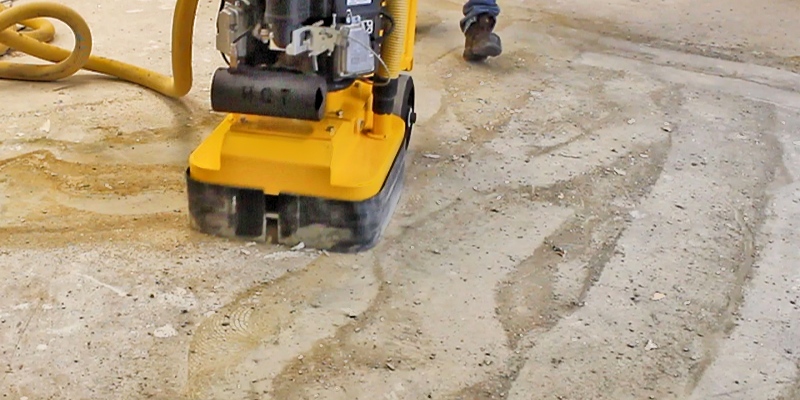
Como sei se a velocidade é adequada?
Preste atenção aos resultados reais do lixamento em vez de confiar apenas na velocidade.
Uma configuração adequada geralmente produz:
Se a ferramenta estiver vitrificando, desgastando-se de forma irregular ou produzindo calor excessivo, alterar a velocidade pode ajudar. No entanto, esses sintomas também podem estar relacionados à seleção da liga, à pressão de lixamento ou à condição do concreto, portanto, a velocidade não deve ser ajustada isoladamente.
Devo alterar a velocidade durante um projeto de lixamento?
Sim, quando as condições de trabalho mudam.
Diferentes etapas, ferramentas ou condições de piso podem exigir diferentes configurações da máquina. Por exemplo, uma velocidade que funciona bem durante o lixamento grosso pode não ser a configuração mais adequada ao usar ferramentas de lixamento de concreto mais finas.
Faça ajustes gradualmente e observe como a ferramenta responde. Isso é geralmente mais útil do que fazer uma grande mudança de velocidade sem verificar os resultados do lixamento.
Obtendo melhores resultados com o lixamento diamantado
A velocidade correta para o lixamento de concreto é a velocidade que permite que a lixadeira e a ferramenta diamantada funcionem de forma eficiente sob as condições reais do piso. Não existe uma RPM universal que deva ser usada para todos os trabalhos de lixamento de concreto.
Para resultados consistentes, combine a velocidade da máquina com o design da ferramenta, a condição do concreto, a etapa de lixamento e o método de operação. Quando esses fatores são combinados corretamente, as ferramentas de lixamento diamantadas podem manter um desempenho mais consistente e sofrer um desgaste mais uniforme durante todo o trabalho.

 IPv6 rede suportada