
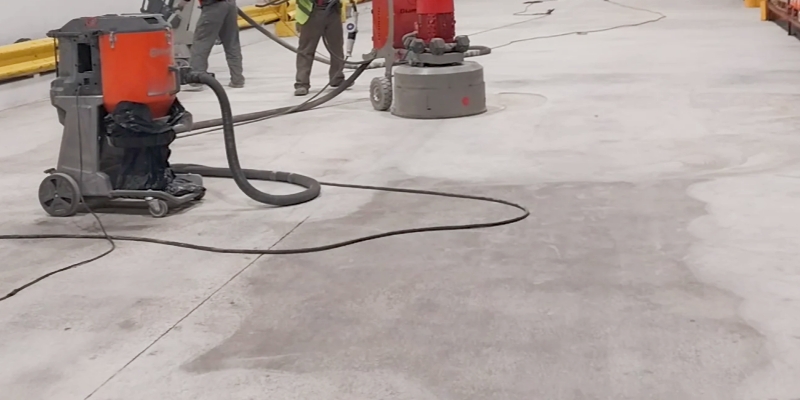
A melhor granulometria para começar a desbastar concreto depende da condição do piso e do objetivo do projeto. Para superfícies muito irregulares, revestimentos espessos ou concreto danificado, os profissionais geralmente começam com uma granulometria grossa, como 16, 20 ou 30, para remover material rapidamente e nivelar a superfície com eficiência. Para pisos mais limpos, com apenas pequenas imperfeições, começar com uma granulometria média pode ser suficiente. Escolher a granulometria inicial correta é importante porque afeta a velocidade de desbaste, os padrões de riscos e a qualidade geral do piso acabado.
Avalie o piso antes de lixá-lo.
Cada piso de concreto reage de forma diferente ao lixamento, por isso é importante inspecionar a superfície cuidadosamente antes de escolher a granulometria inicial. Pisos com áreas ásperas, irregularidades, marcas de desempenadeira ou riscos profundos geralmente exigem uma granulometria mais grossa para remover o material com eficiência e criar uma superfície mais plana. Em muitos casos, os profissionais começam com granulometrias 6, 16 ou 30. ferramentas de retificação de diamante Para correções de superfície mais pesadas. Pisos de concreto mais lisos ou novos, no entanto, podem exigir apenas uma lixa inicial menos agressiva, o que ajuda a reduzir o desgaste desnecessário da ferramenta e cria um processo de lixamento mais controlado.
Por que começar com muita delicadeza pode causar problemas
Começar com uma lixa muito fina geralmente torna o processo de lixamento mais lento e pode deixar imperfeições da superfície sem tratamento. Lixas finas servem para refinar riscos e preparar o piso para o polimento, não para remoção de material em grande quantidade. Se a lixa inicial não for capaz de cortar a superfície adequadamente, os profissionais podem acabar gastando mais tempo lixando e obtendo resultados inconsistentes. Começar com a lixa grossa apropriada cria uma base mais limpa para as etapas seguintes.
Siga uma progressão adequada de perseverança
O polimento de concreto funciona melhor quando a progressão da granulometria é gradual. Após a etapa inicial de desbaste grosso, os profissionais geralmente passam para granulometrias médias e finas para reduzir riscos e suavizar a superfície. Pular etapas de granulometria pode deixar marcas visíveis que se tornam difíceis de remover posteriormente no processo de polimento. A progressão consistente não só melhora a qualidade da superfície, como também auxilia o trabalho de ferramentas diamantadas, como... Sapatos de moagem HTC e Ferramentas de polimento de pisos Lavana Desempenhar suas funções com maior eficiência ao longo de todo o projeto.
Considere a dureza do concreto e a aderência da ferramenta.
A seleção da granulometria também é influenciada pela dureza do concreto. Enquanto concretos mais macios funcionam melhor com ferramentas diamantadas de liga mais dura para evitar desgaste excessivo, concretos duros geralmente exigem ferramentas diamantadas de liga mais macia para expor efetivamente novos diamantes durante o desbaste. Manter a eficiência de corte e prolongar a vida útil da ferramenta pode ser alcançado combinando a granulometria e o tipo de liga de acordo com as condições do piso.
A dureza do concreto, a condição da superfície e a quantidade de material a ser removida devem ser equilibradas ao selecionar a granulometria inicial para o desbaste do concreto. Começar com a granulometria correta torna o processo de desbaste mais suave e resulta em um acabamento mais uniforme. TransGrind Oferece uma variedade de ferramentas de desbaste diamantadas, adequadas para diversas condições de piso e aplicações de desbaste, para empreiteiros que buscam soluções confiáveis para desbaste de concreto.

 IPv6 rede suportada
 English
 français
 Deutsch
 русский
 italiano
 español
 português
 العربية
 日本語
日本語 Polski
 中文
中文